SOUTH TAMPA CHRONICLES
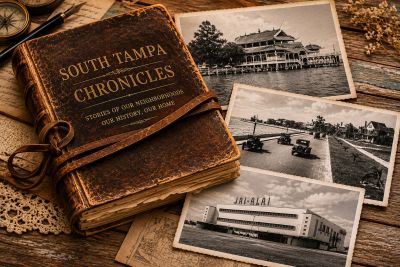
The South Tampa Chronicles is an ongoing collection of stories about the neighborhoods, history, hidden places, architecture, traditions, and people that shaped South Tampa. Every street has a story. Every neighborhood has a past waiting to be rediscovered.
Why Is It Called Palma Ceia?

One of South Tampa's most beautiful neighborhoods has an unexpected connection to Old Havana and a hidden spring that still flows beneath it today.Drive through Palma Ceia and you'll notice something unusual. Streets like El Prado, San Miguel, San Rafael, and Obispo don't sound like typical Florida street names. In fact, they sound more at home in Cuba than Tampa.That's no coincidence.When Palma Ceia was being developed in the early 1900s, Tampa cigar magnate Angel Cuesta, co-founder of the famous Cuesta-Rey cigar company, is believed to have shared a map of Old Havana with developer Thomas Palmer. Inspired by the map, many of the neighborhood's streets were named after streets in Havana, giving Palma Ceia a character unlike any other neighborhood in Tampa.But the story of Palma Ceia began long before elegant homes, oak-lined streets, and manicured lawns.Long before the neighborhood existed, people traveled here for something entirely different.
A Spring That Drew Tampa
At the edge of what is now Bayshore Boulevard was a natural freshwater spring known as Palma Ceia Springs. In the early 1900s, before air conditioning became common, Tampa residents boarded electric streetcars and spent hot summer afternoons swimming in the cool spring water.The spring became one of South Tampa's earliest recreational destinations, attracting families from across the city. Picnic areas, swimming facilities, and the streetcar line helped transform what had once been undeveloped land into one of Tampa's favorite weekend escapes.As South Tampa continued to grow, the swimming area disappeared, streets were paved, and homes replaced open land. Yet the spring itself never stopped flowing.
A Neighborhood Begins to Take Shape
As development spread across South Tampa during the early twentieth century, Palma Ceia evolved into one of the city's premier residential neighborhoods. Large oak trees, Mediterranean Revival architecture, brick streets, and proximity to Bayshore Boulevard helped establish the area's reputation for beauty and prestige.More than a century later, many of those original design elements remain remarkably intact.Perhaps the most fascinating part of Palma Ceia is that its history isn't hidden behind museum walls. It's woven directly into the neighborhood itself.
👀 What Can You Still See Today?
Start by driving through the neighborhood and pay attention to the street signs. You'll still find El Prado, San Miguel, San Rafael, and Obispo, quiet reminders of Palma Ceia's historic connection to Old Havana.Then visit Fred Ball Park. Most visitors see a peaceful neighborhood park, but beneath the park and its fountain lies the same natural spring that attracted Tampa residents more than a century ago.Finally, slow down and enjoy the neighborhood itself. The mature live oaks, brick streets, and historic homes continue to reflect the vision that shaped Palma Ceia during its earliest years.History isn't something you have to imagine here.You're driving through it.
Did You Know?
- Several Palma Ceia street names were inspired by streets in Old Havana.
- Palma Ceia Springs was once one of Tampa's most popular swimming destinations.
- Visitors once rode Tampa's streetcar system to reach the spring.
- The natural spring still exists beneath Fred Ball Park today.
Historical Sources
- Tampa-Hillsborough County Public Library Digital Collections
- University of South Florida Special Collections
- Florida Memory Project
- City of Tampa historical records
- Rodney Kite-Powell, Palma Ceia: A Neighborhood Rising from the Pines
Explore More
- Why Is It Called Ballast Point?
- Why Is It Called Virginia Park?
- The Story of Port Tampa City